• Home
  • About
    • Glossary
    • Bibliography
  • Theatre (Elementary)
    • Story Dramatization and Tableaus
    • Illustrations: The Gateway to Storytelling
    • Poetry in Motion
  • Video (Elementary)
    • Book Trailer
    • Digital Storytelling
  • Theatre (Middle)
    • It's Alive!
    • Performing a Poem
  • Photography (Middle)
    • Who are you?
    • What Images Stand Out?
  • Contact
  Just Good Teaching

​


"Something that doesn't get enough time [in the classroom] is creating a love of literacy... Presenting literacy in such a
​way that is appealing to kids and they develop a passion around reading and writing
."

~Susan Segear, (Literacy Coordinator for Pre-K to Second Grade)
Picture

Illustrations: The Gateway to Storytelling

In this Activity: Students will explain what is happening by analyzing clues they pick up on within the image.
 
Literacy: Visual Literacy and Reading of Images
 
Why?: Help students gain knowledge from reading images instead of words
 
Educational Benefits:
-> Helps students become more socially literate

Activity Length: 20 minutes
 
Ages: First Grade, Second Grade, Third Grade

How?

NOTE: There are wonderful modifications to this activity below to make it a longer lesson
  • Pick an image that is open ended
    •  Examples below
  • Introduce this image to the class
  • Have the students talk about what they notice about the picture
    • “What do you see in this picture?"
    • “How do you think the subject feels?”
    •   “Why do you think that?”
  • Have the students write a quick free write about what could be happening in this image

Common Core Standards

              First Grade

RL.1.7: Use illustrations and details in a story to describe it’s characters, setting, and events
​
​RI.1.7: Use the illustrations and details in a text to describe its key ideas
          Second Grade

RL.2.7: Use information gained from the illustrations and words. Understanding of characters, setting, or plots
​
​RI.2.7: Explain how specific images contribute to and clarify a text
                 Third Grade

RL.3.7: Explain specific aspects of a text’s illustrations contribute to what is conveyed by the words in a story (e.g. mood, emphasize aspects of a character or setting)
RI.3.7: Use information gained from illustrations and the words in a text to demonstrate understanding of the text (e.g. where, when, why, and how key events occur)

Assessment 

  • Did the students decipher a story from the image given?
  • Did the students participate in the group discussion?

Modifications 
(If used, modifications will effect length of the activity)

​1. Continue with the one image (additional 20 minutes)
  • Have the students use the first image as a jumping off point and create a full story
    • Or use the one image to move into the next modification
2. Wordless Stories (40 minutes)
  • Pick a picture book that has no text
  •  Photocopy the picture book
  • Give groups of students a copy of the picture book
  • Have students create their own stories based on clues from the illustrations
3. Speech Bubbles (Additional 10 minutes)
  • Give the students sticky notes and have them create speech bubbles to express what the characters are saying within the picture
4. Thought Bubbles (Same as Speech Bubbles)
  • Give students sticky notes and have them create a thought bubble to express what the character(s) are thinking but not saying out loud5. Do both modifications 3 and 4. (Have students write what the character is saying and what they are thinking but not saying out loud)

6. Create Images Using Students Bodies (Additional 25 minutes)
  • Split the class into groups of four or five students
  • Have each group create a tableau (or frozen image with their bodies) that has a specific idea in mind
    • Ex: First day of school
  • Have each group present the image to the class and have them try and analyze what is happening in the image. 

Examples of Images and Questions

Picture
Single Images Analysis​


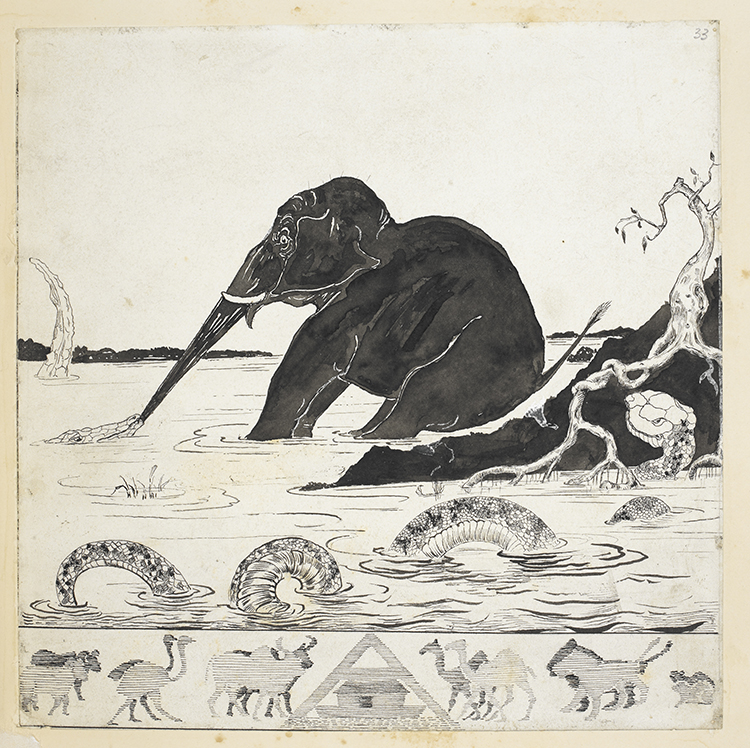
  • “What is happening in this image?”

  • “What do you see?”

  • “What is the elephant feeling?”

  • "Why is the snack watching this interaction?

  • "What is the snake going to do next?"
Picture
​Single Images Analysis​

  • “What do you see?”

  • “Where is she?”

  • “How is she feeling?" 

  • What is the river made of?
​
  • “Why is she on a book?”

Specific Resources

http://www.ala.org/alsc/awardsgrants/bookmedia/caldecottmedal/caldecottmedal
Caldecott Medal Book Winners
  • This website offers a number of award winning books with beautiful illustrations, giving some inspiration
http://www.digitalartsonline.co.uk/news/illustration/10-best-picture-books-for-children/
10 Best Picture Books for Children
  • More inspiration for educators to use well illustrated books
http://www.iste.org/docs/excerpts/medlit-excerpt.pdf
“Visual Literacy”
  • This article talks about the importance of visual literacy, or picture reading

Activity PDF

Below is a downloadable PDF of the activity you have just read
illustrations-the_gateway_to_storytelling.pdf
File Size: 73 kb
File Type: pdf
Download File


  • Home
  • About
    • Glossary
    • Bibliography
  • Theatre (Elementary)
    • Story Dramatization and Tableaus
    • Illustrations: The Gateway to Storytelling
    • Poetry in Motion
  • Video (Elementary)
    • Book Trailer
    • Digital Storytelling
  • Theatre (Middle)
    • It's Alive!
    • Performing a Poem
  • Photography (Middle)
    • Who are you?
    • What Images Stand Out?
  • Contact