• Home
  • About
    • Glossary
    • Bibliography
  • Theatre (Elementary)
    • Story Dramatization and Tableaus
    • Illustrations: The Gateway to Storytelling
    • Poetry in Motion
  • Video (Elementary)
    • Book Trailer
    • Digital Storytelling
  • Theatre (Middle)
    • It's Alive!
    • Performing a Poem
  • Photography (Middle)
    • Who are you?
    • What Images Stand Out?
  • Contact
  Just Good Teaching

​


“The best way of teaching literacy is to have someone who is passionate about stories”
~Alice Lucey (Head of Middle School Division​)

Picture

What Images Stand Out?

In This Activity: Within this activity the students will be asked to 1) read a short story, 2) storyboard images, 3) find or create photographs that tell the narrative, and 4) as a final project create a class mural portraying the story using selected images from each student.

Literacy: Storytelling,Visual Literacy, Reading

Why?: Using visual literacy to tell a story with no words. Giving students the opportunity to explore images and their storytelling abilities

Age: Sixth-Eighth Grade
​

Class periods: 2 (will take longer than one class time)


How

  • Choose a short story for the class to read as a group. This story should be connected to the curriculum involving subjects, themes, and/or authors the students have been learning about.
    • For example: A short story by Edgar Allan Poe, a story from Greek Mythology, or even a historical story from the subject being taught in History class can be used.
  • Once the story has been read to/by each student in the classroom, the teacher will then ask “What images stood out for you within this story?”
    • The teacher will ask the students to free write for two minutes about this prompt.
      • A free write is when a student continuously writes for the time allotted by the teacher. For example, if a student is free writing for two minutes and they are not positive what should come next in their stream of consciousness, they are allowed to write ‘umm’ or ‘I don’t know’ or just write random letters until they have something new to write. The idea behind a free write is to give the students the opportunity to get out their thoughts onto a piece of paper without feeling as though they have to be perfect. The free write should help them brainstorm their next move within a larger project.
  • After using this prompt the students will create a storyboard in which they can map out the important events of the story.
    • For example, one student may only use six boxes in a storyboard while another may use ten boxes. Fifteen should be the maximum number of boxes.
  • Once each student has made his or her own storyboard, for homework the class will then be asked to go home and find/create ten images that can be put together sequentially to tell the narrative of the short story as portrayed in their storyboard.
    • During the second day of this assignment, the students will bring these ten images they found/created from home back to the classroom to ultimately help put together a mural.
  • The students will first be asked to put ALL of their images on a board in sequential order. This can either be on a foam core board or even just sticking it up on the walls of the classroom.
    • After walking around the room looking at each other’s images the students will be asked to pick out similar and/or related images from each other’s boards.
    • As a group the students will be asked to narrow down the images from each other’s image storyboards to tell the narrative of the short story.
  • The final product should be a mural of images from the classes different visual interpretations of this short story.

Common Core Standards

Sixth Grade
​RL.6.2
​
​
Determine a theme or central idea of a text and how it is conveyed through particular details; provide a summary of the text distinct from personal opinions or judgments

​
RL.6.3

Describe how a particular story’s or drama’s plot unfolds in a series of episodes as well as how the characters respond or change as the plot moves toward a resolution
Seventh Grade
​RL.7.2​
​

Determine a theme or central idea of a text and analyze its development over the course of the text; provide an objective summary of the text.

​
​

RL.7.3

Analyze how particular elements of a story or drama interact (e.g., how setting shapes the characters or plot).
Eighth Grade
​RL.8.2
​
​
Determine a theme or central idea of a text and analyze its development over the course of the text, including its relationship to the characters, setting, and plot; provide an objective summary of the text.
​
​RL.8.3

Analyze how particular lines of dialogue or incidents in a story or drama propel the action, reveal aspects of a character, or provoke a decision.

Modifications

  • Growth on the mural 
    • The mural could be placed on a poster board to be relocated to different classrooms or around the school.
    • The mural could be used in a future project involving image reading and visual literacy.
      • It could be used as an example or even as a jumping off point for a project involving the students solely creating images themselves.
      • It could be used as an introduction into using visual literacy and then the students could work with tableaus. (SEE TABLEAU ACTIVITY IN THEATRE ELEMENTARY)

Examples

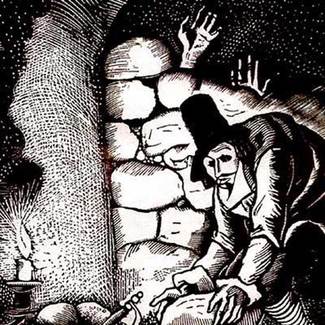
  • Cask of Amontillado
    • ​Many examples of visual imagery
Picture
Miss Racial discrimination topics Julie by August Strindberg Free
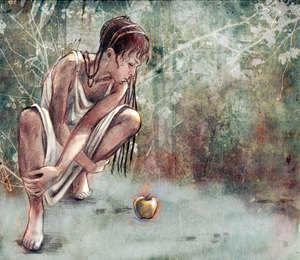
Atalanta and the Golden Apples
  • ​Defined events within the story.
  • Clear imagery
Picture
http://www.deviantart.com/tag/atalanta​

Resources

story_board_template.pdf
File Size: 31 kb
File Type: pdf
Download File

http://poestories.com/stories.php
Short stories by Edgar Allan Poe

http://cdslatin6.weebly.com/daulaires-book.html
​D’Aulaires’s Book of Greek Myths: 6th Grade
Latin, Greco-Roman Mythology

Activity PDF

Below is a downloadable PDF of the activity you have just read.
what_images_stand_out.pdf
File Size: 109 kb
File Type: pdf
Download File


  • Home
  • About
    • Glossary
    • Bibliography
  • Theatre (Elementary)
    • Story Dramatization and Tableaus
    • Illustrations: The Gateway to Storytelling
    • Poetry in Motion
  • Video (Elementary)
    • Book Trailer
    • Digital Storytelling
  • Theatre (Middle)
    • It's Alive!
    • Performing a Poem
  • Photography (Middle)
    • Who are you?
    • What Images Stand Out?
  • Contact